Institut Imtiyaz — Who We Are
The aim of Institut Imtiyaz is to:
- Promote human consciousness through education, research, dialogue, and support for any initiative to that end.
- Create activities and spaces for teaching and dialogue based on respect and tolerance.
- Produce content (writings, audio, films, works of art) aimed at fostering the awakening of consciences.
Idrîs de Vos, founder and teacher of Arabic and tafsîr
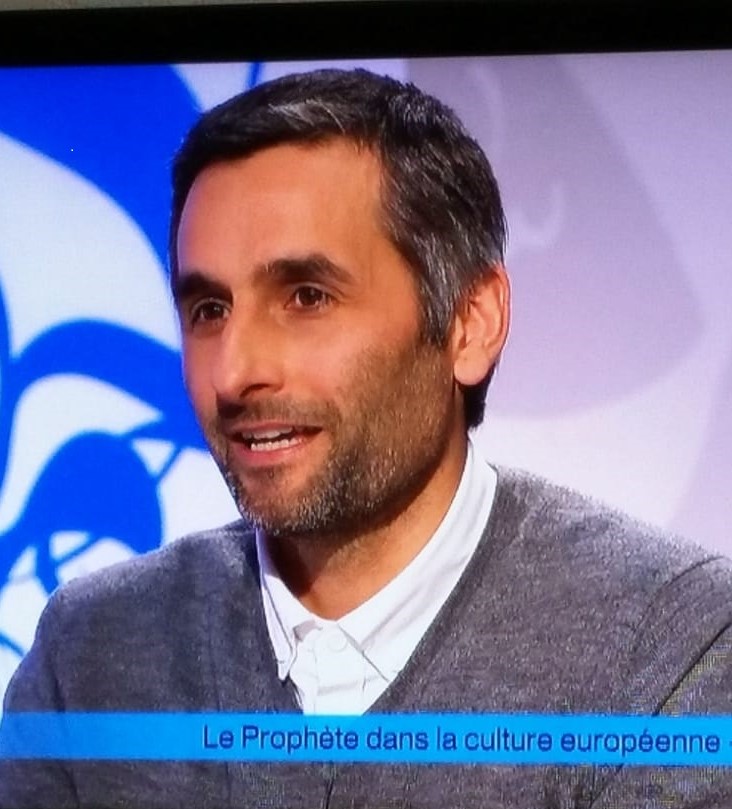
Idrîs de Vos is the founder of Institut Imtiyaz.
He is an author, translator and teacher of Arabic and tafsîr. He is the creator of the method L’arabe coranique (3 volumes), published in English as Qur’anic Arabic Textbook.
He also teaches Arabic at the IFAGE foundation (creation of teaching materials — workshops, role-plays, oral and written exercises; development of an innovative Arabic method for adults; creation of PowerPoint animations; teaching and mentoring of adult students).
Born into the world of Muslim mysticism, he is the grandson of the late Maurice Gloton.
A graduate of the Sorbonne in Arabic language and civilisation, he also studied in Fez and at the Zâwiya Bassiriya.
Bibliography: books by Idrîs de Vos
He is the author of more than thirty works, mainly translations, all published in French (the Qur’anic Arabic textbook is also available in English, as well as in Spanish, German and Italian). See the bibliography below:
- Qur’anic Arabic, an Arabic textbook based on the Qur’an, volume 1, Albouraq, 2020.
- Qur’anic Arabic, an Arabic textbook based on the Qur’an, volume 2, Albouraq, 2023.
- Qur’anic Arabic, an Arabic textbook based on the Qur’an, volume 3, Albouraq, 2024.
- Ibéris (a novel), Victor Lebrun, 2019.
- Sagesses soufies, Albouraq, 2016 (a collection of Sufi sayings, with calligraphies by Mounir El Khourouj).
- L’amour universel, un cheminement soufi, Albouraq, 2013 (a study, with translations, on the theme of love in Sufism).
- La poésie andalouse, Sindbad / Actes Sud, 2008 (translations of Arab-Andalusian poems).
- L’éloge du Prophète, Sindbad / Actes Sud, 2010.
- Les franges du jour, Les Murailles, 2003 (a collection of the author’s own poems).
Translations of Sufi and classical Arabic works
Translations (the al-Ghazâlî titles are books from his Iḥyâ’ ʿulûm al-dîn, the Revival of the Religious Sciences):
- La liberté de croyance en Islam, Hasan Farhan al-Maliki, Bachari, 2021.
- Les doctrines des grands maîtres (the al-Yawâqît wa-l-jawâhir fî bayân ʿaqâ’id al-akâbir of Imam ʿAbd al-Wahhâb al-Shaʿrânî, volume 1), Albouraq, 2021.
- Paroles d’amour, Albouraq, 2020 (an anthology of Sufi love poems, with calligraphies by Mounir El Khourouj).
- La poésie du juriste al-Shâfiʿî, Albouraq (forthcoming).
- Enseignements d’un grand maître soufi, les lettres de Mulay al-ʿArabî al-Darqâwî, Albouraq, 2017.
- Le Soufisme à la lumière du Coran et de la Sunna (excerpts from the ʿAwârif al-maʿârif), Shihâb al-Dîn ʿUmar al-Suhrawardî, Les 4 Sources, 2016.
- Les nobles traits du prophète Muhammad (the Shamâ’il), Imam al-Tirmidhî, Albouraq, 2015.
- Tawâsîn al-Ghazâlî (a novel), ʿAbd al-Ilâh Ibn ʿArafa, Sagesses d’Orient, 2015.
- Initiation spirituelle et éducation de l’âme, al-Ḥakîm al-Tirmidhî, Albouraq, 2015.
- Des convenances de l’alimentation, al-Ghazâlî, Albouraq, 2015 (from the Revival of the Religious Sciences).
- Livre des secrets de la purification, al-Ghazâlî, Albouraq, 2015 (from the Revival of the Religious Sciences).
- Le Nectar cacheté, biographie du prophète Muhammad (al-Raḥîq al-makhtûm), Ṣafiyy al-Raḥmân al-Mubârakfûrî, Albouraq, 2014.
- Travail et moyens de subsistance, al-Ghazâlî, Albouraq, 2014 (from the Revival of the Religious Sciences).
- Livre des dévotions quotidiennes, al-Ghazâlî, Albouraq, 2014 (from the Revival of the Religious Sciences).
- Le livre des bons rapports sociaux, al-Ghazâlî, Albouraq, 2014 (from the Revival of the Religious Sciences).
- Les secrets de l’aumône et du don charitable, al-Ghazâlî, Albouraq, 2014 (from the Revival of the Religious Sciences).
- Des litanies et des invocations, al-Ghazâlî, Albouraq, 2013 (from the Revival of the Religious Sciences).
- Intention, pureté et sincérité, al-Ghazâlî, Albouraq, 2012 (from the Revival of the Religious Sciences).
- De l’indigence et du renoncement, al-Ghazâlî, Albouraq, 2012 (from the Revival of the Religious Sciences).
- Le livre de l’amour, al-Ghazâlî, Albouraq, 2012 (from the Revival of the Religious Sciences).
- De la crainte et de l’espoir, al-Ghazâlî, Albouraq, 2012 (from the Revival of the Religious Sciences).
- De la patience et de la gratitude, al-Ghazâlî, Albouraq, 2012 (from the Revival of the Religious Sciences).
- Vigilance du cœur et examen de conscience, al-Ghazâlî, Albouraq, 2012 (from the Revival of the Religious Sciences).
- Les singularités du cœur, al-Ghazâlî, Albouraq, 2011 (from the Revival of the Religious Sciences).
- L’éducation de l’âme, al-Ghazâlî, Albouraq, 2011 (from the Revival of the Religious Sciences).
- Commentaire des sagesses d’Ibn ʿAṭâ’ Allâh, Ramaḍân al-Bûṭî, Sagesses d’Orient, 2011.
- Le péché intérieur, Ramaḍân al-Bûṭî, Sagesses d’Orient, 2010.
- La décadence des musulmans, qui en est responsable ?, Ramaḍân al-Bûṭî, Sagesses d’Orient, 2010.
- Qui est maître du destin de l’Homme ?, Ramaḍân al-Bûṭî, Sagesses d’Orient, 2010.
Gregory Vandamme, Islamologist and teacher
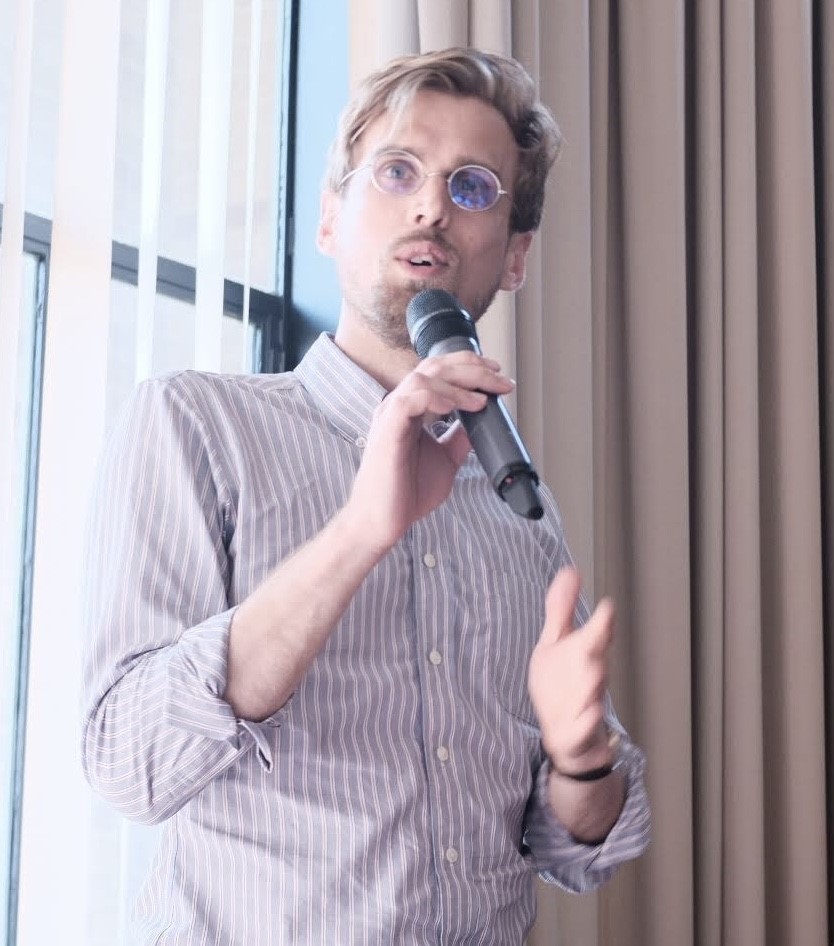
Gregory Vandamme contributes to Imtiyaz as a teacher.
On 22 November 2025, he received the “International Henry Corbin Prize for research in Islamic studies and the science of religions” at the École Pratique des Hautes Études l PSL.
He is an Islamologist, doctor in the Science of Religions (UCLouvain), a specialist in classical Sufi thought, and in particular in the work of Ibn ʿArabî and his commentators.
He is currently a research fellow (F.R.S.-FNRS / UCLouvain, Belgium) and has notably been a visiting lecturer at SciencesPo (Paris/Menton) and at the Al Mowafaqa Institute (Rabat).
His doctoral thesis in the science of religions dealt with the notion of ḥayra (or “perplexity”) in the thought of Ibn ʿArabî and his predecessors, and its use in the fields of epistemology, metaphysics and Qur’anic hermeneutics.
He is the author of several scholarly articles, co-organiser of international academic meetings, and an editor for the Journal of the Muhyiddin Ibn ‘Arabi Society.
His research focuses mainly on the doctrines of speculative mysticism, Qur’anic hermeneutics, and the spiritual education of Sufism.
Academic publications on Ibn ʿArabî and Sufism
Selected publications:
“Some Notes on Ibn ʿArabī’s Correlative Prophetology”, in Islamic Thought and the Art of Translation: Texts and Studies in Honor of William C. Chittick and Sachiko Murata, ed. M. Rustom, Brill, 2023, pp. 97–116.
“The ‘Veil of Glory’: Perplexity (ḥayra) and Revelation in the Qur’ānic Hermeneutics of Ibn ʿArabī”, in Philosophical Hermeneutics and Islamic Thought, ed. S. Camilleri & S. Varlik, Springer, 2022, pp. 79–94.
“L’ontologie corrélative d’Ibn ʿArabī : métaphysique de l’être et de ses relations”, in La non-dualité : perspectives philosophiques, scientifiques, spirituelles, ed. J.-M. Counet, Peeters, 2021.
“Un cœur blanc comme neige : amour et connaissance dans l’herméneutique coranique et la spiritualité islamique”, in Le Miroir d’Isis, no. 28 (April 2021).
“Le shaykh comme ‘dispositif’ de dévoilement”, in Conscience Soufie, ed. E. Geoffroy, no. 3, “Transmission et initiation” (April 2020).
“Panorama de la littérature francophone sur le soufisme : aperçus sur les auteurs et les démarches éditoriales”, in La foi musulmane par les livres. Dynamiques, stratégies et évolution religieuse des publications islamiques en langue française, ed. Anne-Laure Zwilling, Le Cerf, 2023.
Translations in Anthologie bilingue de la philosophie en Islam, ed. F. Gillon and M. Terrier, Diacritiques, 2025.
“L’éducation spirituelle et le « maître imaginaire » selon Ibn ʿArabī dans son K. al-Ajwiba al-ʿarabiyya fī sharḥ al-naṣāʾiḥ al-yūsufiyya”, in Sainteté et héritage prophétique en Islam. Études sur Ibn al-ʿArabī et l’histoire de la sainteté dédiées à la mémoire de Michel Chodkiewicz, ed. D. Gril and F. Chiabotti, De Gruyter, 2025.
Full list of publications: uclouvain.academia.edu/GregoryVandamme.
Omar Bellaari and Hakim: teaching and student support
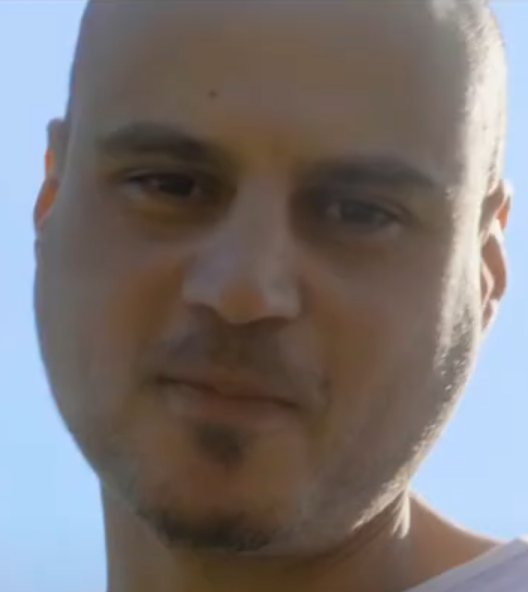
Hakim. Facilitator, responsible for the quality of follow-up with students.
